
The $40B Problem: How VR Workplaces failed
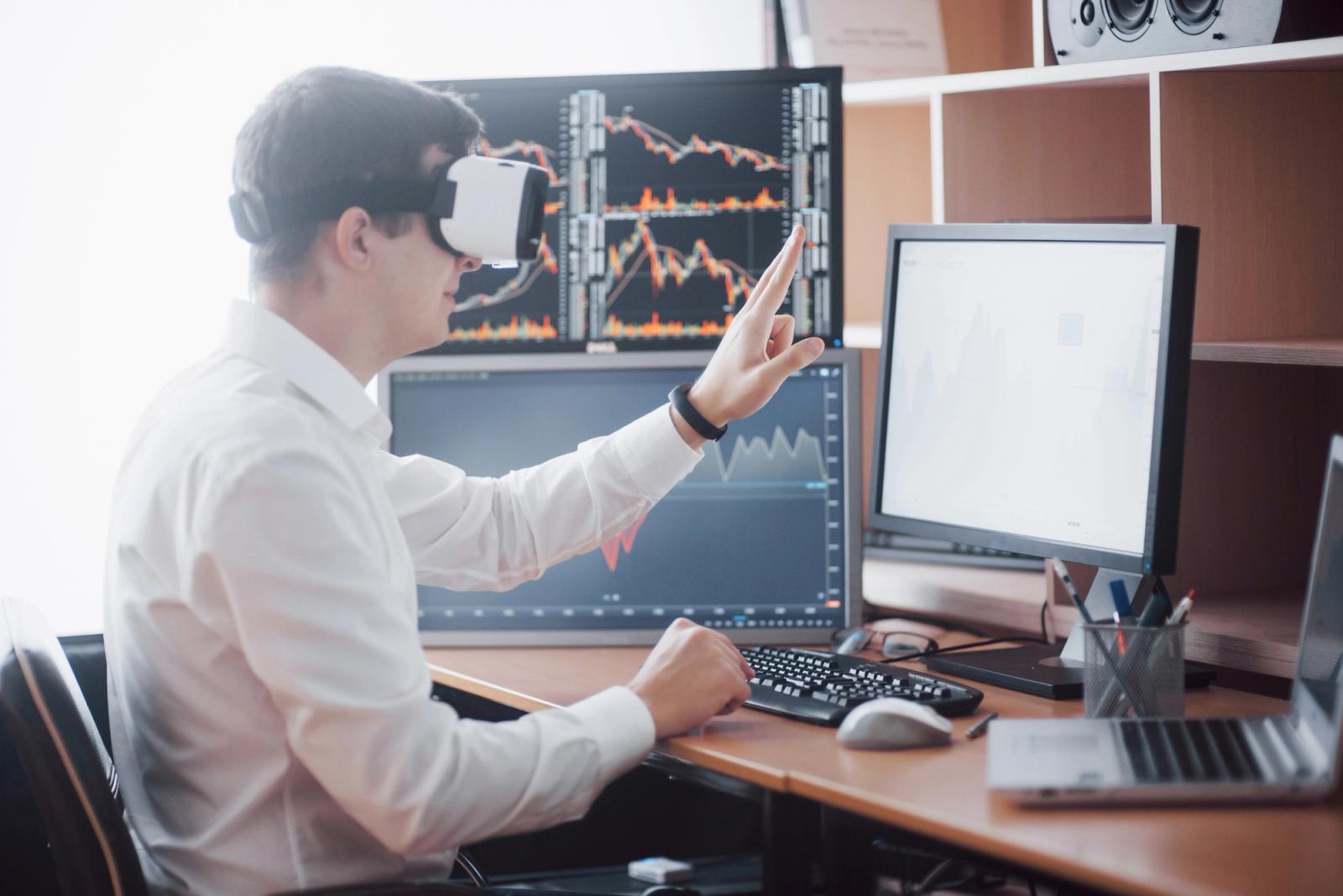
On February 16, 2026, Meta shut down Horizon Workrooms, the virtual reality meeting app that was supposed to justify the company's $10 billion annual bet on the metaverse. The app launched in 2021 with a compelling demo: sit at a virtual conference table, see your colleagues as legless avatars, scribble on a shared whiteboard. Five years and more than $40 billion in Reality Labs losses later, the vision hasn't scaled.
The postmortems will focus on hardware friction (headsets are heavy), avatar uncanniness (legless torsos are weird), and market timing (the enterprise wasn't ready). These explanations are true but insufficient. The deeper issue is that VR solved the wrong problem.
The presence problem, misdiagnosed
Video conferencing has a well-documented flaw: it doesn't feel like being in the same room. Stanford's Jeremy Bailenson has spent years documenting why. Faces displayed at intimate distance trigger hypervigilance. Cameras above screens make eye contact impossible. The self-view window turns every call into a mirror. The result is cognitive fatigue that accumulates across a workday.
Meta's response was to escape the screen entirely. Replace the rectangle with a 3D environment. Replace the face with an avatar. Replace the room with a simulation.
But this trades one set of problems for another. Headsets isolate you from your physical environment. Avatars strip out the micro-expressions that regulate conversation. The onboarding curve is steep, the wearing time is limited, and the social acceptability in a professional context never materialized. Surveys consistently found that most knowledge workers wouldn't use VR for daily collaboration, even when given free hardware.
The insight Meta missed: people don't want to escape the screen. They want the screen to stop getting in the way.
What's replacing the metaverse office
While VR stumbled, a quieter category has been gaining traction: room-scale immersive displays that show remote participants at life-size, with full-body visibility and natural eye-contact alignment.
The principle is simple. Instead of shrinking colleagues into a grid of thumbnails or abstracting them into cartoons, show them as they actually appear: standing, sitting, gesturing, at human scale. Align the cameras so that looking at someone's eyes on screen means looking into the camera. Remove the self-view. Let people move.
This isn't new technology. Cisco's TelePresence rooms pursued similar goals in 2006, but at $300,000 to $750,000 per installation, adoption was limited to executive boardrooms. Cisco has since discontinued the line in favor of AI-enhanced standard conferencing. The current generation of immersive portals (from companies including Noro, Tonari, and Google's Beam project with HP) aims to deliver comparable presence at lower cost and with simpler deployment.
Early results suggest the approach works. Pilot data from enterprise deployments shows average meeting lengths of 82 minutes, nearly triple the typical video call, with satisfaction rates above 99%. Users report they'd replace frequent travel with portal sessions. The format appears particularly suited to extended, high-stakes interactions: training, workshops, negotiations, and cross-site team building.
The lesson for collaboration technology
The VR-for-work thesis failed because it prioritized immersion over presence. Immersion means surrounding you with a synthetic environment. Presence means feeling like you're with another person. These are not the same thing, and for professional collaboration, the second matters more.
Humans are exquisitely tuned to detect social cues from faces and bodies at conversational distance. We read intention, attention, trustworthiness, and emotional state from signals that operate below conscious awareness. When those signals degrade (as in standard video) or disappear (as in avatars), collaboration becomes effortful. When they're preserved (as in life-size, full-body video with correct sight lines), conversation flows more naturally.
This isn't speculation. Research in the journal Displays found that enabling true eye contact in video-mediated communication improves trust and makes interaction "richer and more efficient." Microsoft's Human Factors Lab found that even brief breaks from video-call stress prevent cumulative cognitive fatigue. The science points consistently toward the same conclusion: fidelity to human perception matters more than novelty of environment.
What comes next
Meta's exit from VR collaboration doesn't mean the presence problem is solved. Most organizations still rely on standard video conferencing for most meetings, accepting the fatigue as a cost of distributed work. Travel budgets have rebounded but remain under pressure. The "missing middle" of collaboration (sessions too long for Zoom, too frequent for flights) is still underserved.
The companies that fill this gap won't be selling escape from reality. They'll be selling a better window into it: larger, clearer, and aligned with how humans actually perceive each other.
The metaverse office was a $40 billion bet that people would rather meet as avatars in a simulation than as themselves on a screen. The market has answered. The next chapter of workplace presence will be less sci-fi and more straightforward: show people as they are, at the scale they'd appear if they were actually in the room.
No headset required.
Tommaso Trionfi is Co-founder and CEO of Noro, an immersive technology company building life-size video portals for enterprise collaboration. He previously founded Wimba, a virtual classroom platform acquired by Blackboard.